
Chemical Peels in Santa Fe: Types, Benefits, and What to Expect at Seamless Skin MD
Living in Santa Fe comes with unique rewards and unique challenges for your skin. At over 7,000 feet of elevation, the thin mountain air offers less protection from UV radiation. Add in the high desert climate with its low humidity, and your skin works overtime to stay healthy. Over time, this environment can accelerate sun damage, fine lines, uneven pigmentation, and texture changes that leave your complexion looking dull or aged.
Our chemical peels in Santa Fe offer one of the most effective and time-tested solutions for these concerns. At Seamless Skin MD in Santa Fe, our medical team customizes each peel to address your specific skin type, concerns, and goals. Whether you are dealing with sun spots from years of hiking under the New Mexico sun, stubborn hyperpigmentation, or early signs of aging, chemical peels can help you reclaim smoother, brighter, more youthful-looking skin.
This guide covers everything you need to know about chemical peels, from how they work to what recovery looks like, so you can make an informed decision about your treatment.
What Is a Chemical Peel and How Does It Work?
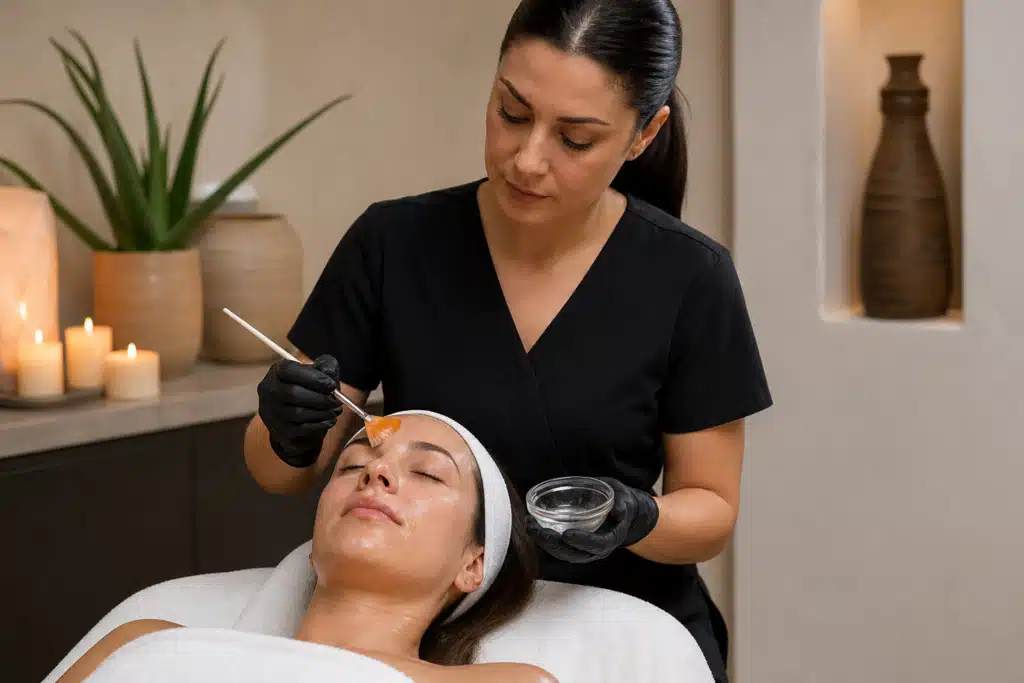
A chemical peel is a controlled exfoliation treatment that uses specially formulated acid solutions to remove damaged outer layers of skin. When the solution is applied to the face, it dissolves the bonds between dead and damaged skin cells, prompting your body to shed those layers and reveal fresh, healthier skin underneath.
This process also triggers your skin’s natural healing response. As your body works to regenerate new tissue, it produces increased amounts of collagen and elastin, the proteins responsible for skin firmness, smoothness, and resilience. The result is skin that not only looks better on the surface but is structurally stronger and more even-toned.
Chemical peels have been used in dermatology and medical aesthetics for decades. Modern formulations offer a wide range of intensities, from gentle lunchtime peels to deeper treatments that produce dramatic results.
Types of Chemical Peels Available at Seamless Skin MD
Not all chemical peels are the same. The right peel for you depends on your skin concerns, skin type, and the amount of downtime you can accommodate. At Seamless Skin MD, we offer peels across three main categories.
Superficial (Light) Peels
Light peels use mild acids like alpha-hydroxy acids (AHAs) or beta-hydroxy acids (BHAs) to exfoliate only the outermost layer of skin, the epidermis. These are ideal for first-time peel patients and those looking for a quick refresh with minimal downtime.
Best for:
- Mild sun damage and uneven skin tone
- Minor texture irregularities
- Dull, lackluster complexion
- Enlarged pores and light acne
Common acids used: Glycolic acid, lactic acid, salicylic acid, mandelic acid
Recovery: Most patients experience mild redness for a few hours. You can typically return to normal activities the same day. Light flaking may occur for 1 to 3 days.
Medium-Depth Peels
Medium peels penetrate through the epidermis into the upper portion of the dermis. They use stronger concentrations of acids, most commonly trichloroacetic acid (TCA), to address moderate skin concerns. These peels produce more noticeable results than light peels.
Best for:
- Moderate sun damage and age spots
- Fine lines and wrinkles
- Acne scars and post-inflammatory hyperpigmentation
- Melasma (with careful application)
Common acids used: TCA (15 to 35%), Jessner’s solution, higher-concentration glycolic acid
Recovery: Expect 5 to 7 days of peeling and redness. Most patients plan for about a week of social downtime. Swelling is possible in the first 48 hours.
Deep Peels
Deep chemical peels penetrate into the mid-to-lower dermis and produce the most dramatic results. These are medical-grade treatments that require careful pre-treatment preparation and monitoring during the procedure.
Best for:
- Deep wrinkles and significant photodamage
- Severe hyperpigmentation
- Precancerous skin growths (actinic keratoses)
- Significant acne scarring
Common acids used: High-concentration TCA, phenol-based solutions
Recovery: Deep peels require 10 to 14 days of recovery, sometimes longer. Redness may persist for several weeks as the skin heals. These peels are typically done only once or a limited number of times.
Why Chemical Peels Are Especially Beneficial in Santa Fe
Santa Fe’s high-altitude desert environment creates specific skin challenges that chemical peels are uniquely suited to address.
Sun damage accumulation. At 7,199 feet, Santa Fe receives approximately 25% more UV radiation than sea-level cities. Even with diligent sunscreen use, cumulative sun exposure over months and years leads to hyperpigmentation, rough texture, and premature aging. Chemical peels target and remove these damaged layers to reveal undamaged skin below.
Dry climate dehydration. New Mexico’s average humidity hovers between 10 and 30%, which constantly pulls moisture from the skin. This dehydration accelerates the appearance of fine lines and makes skin look dull. After a chemical peel, the fresh skin that emerges responds better to hydrating products and retains moisture more effectively.
Active outdoor lifestyle. Santa Fe residents are often hikers, skiers, and outdoor enthusiasts. That active lifestyle is wonderful for overall health, but it exposes skin to wind, UV, and temperature extremes. Regular light-to-medium peels help counteract the visible effects of that exposure.
What Does a Chemical Peel Treat?
Chemical peels address a wide range of skin concerns, making them one of the most versatile treatments in medical aesthetics.
- Sun spots and age spots: Peels break up clusters of excess melanin that cause brown spots, revealing more even-toned skin.
- Fine lines and wrinkles: By stimulating collagen production, peels help smooth fine lines, especially around the eyes, mouth, and forehead.
- Acne and acne scars: Salicylic acid peels penetrate into pores to clear active breakouts, while TCA peels can soften the appearance of acne scars.
- Hyperpigmentation and melasma: Controlled exfoliation helps fade dark patches caused by hormones, sun exposure, or inflammation.
- Rough or uneven texture: By removing dead cell buildup, peels leave skin noticeably smoother to the touch.
- Dull complexion: The cell turnover triggered by a peel brings fresh, luminous skin to the surface.
- Enlarged pores: Regular peels keep pores clear of debris, making them appear smaller and less noticeable.
What to Expect During Your Chemical Peel at Seamless Skin MD
Understanding the process helps you feel prepared and confident going into your treatment.
Consultation. Every chemical peel at Seamless Skin MD begins with a thorough skin assessment. Your provider will evaluate your skin type, current concerns, medical history, and goals to recommend the most effective peel for you. If you have been using retinoids, certain medications, or other active skincare products, your provider may ask you to adjust your routine before treatment.
The treatment. On the day of your peel, your skin is thoroughly cleansed. The peel solution is then applied in controlled layers. You may feel a warm or tingling sensation during application. The provider monitors your skin’s response throughout the process and neutralizes the solution at the appropriate time. Light peels take about 15 to 20 minutes. Medium and deep peels may take 30 to 45 minutes.
Immediately after. Your skin will appear pink to red depending on the depth of the peel. Your provider will apply soothing products and give you detailed aftercare instructions. For light peels, you can resume normal activities right away. For medium and deep peels, plan for downtime.
Chemical Peel Recovery and Aftercare Tips
Proper aftercare is critical to getting the best results from your peel, especially in Santa Fe’s intense sun environment.
- Avoid direct sun exposure for at least 7 to 14 days after your peel. Your new skin is significantly more sensitive to UV radiation. In Santa Fe, this is non-negotiable.
- Use broad-spectrum SPF 30 or higher every single day, even if you are staying indoors near windows.
- Do not pick or pull peeling skin. Let it shed naturally to avoid scarring or discoloration.
- Keep your skin hydrated with gentle, fragrance-free moisturizers recommended by your provider.
- Skip active ingredients like retinol, vitamin C serums, and exfoliating acids until your provider clears you to resume them.
- Drink plenty of water. Santa Fe’s dry air dehydrates you from the inside out. Staying well-hydrated supports healing.
How Often Should You Get a Chemical Peel?
The ideal frequency depends on the type of peel and your skin goals.
- Light peels: Every 4 to 6 weeks for ongoing maintenance. Many patients schedule a series of 4 to 6 treatments to achieve optimal results, then transition to occasional maintenance peels.
- Medium peels: Every 3 to 6 months. These peels require more recovery time, so spacing them appropriately allows your skin to fully heal and remodel between treatments.
- Deep peels: Once per year at most, and some patients achieve their goals with a single treatment. Your provider will advise based on your skin’s response.

Chemical Peels vs. Other Skin Resurfacing Treatments
Chemical peels are one of several skin resurfacing options available at Seamless Skin MD. Here is how they compare.
Chemical peels vs. microneedling RF. Microneedling RF uses tiny needles combined with radiofrequency energy to stimulate collagen deep within the skin. It is excellent for skin tightening, deep acne scars, and texture. Chemical peels are better for surface-level concerns like pigmentation and dullness. Many patients benefit from combining both treatments on an alternating schedule.
Chemical peels vs. IPL photofacial. IPL (Intense Pulsed Light) targets pigmentation and vascular concerns with light energy rather than chemical exfoliation. IPL is ideal for redness, broken capillaries, and scattered sun spots. Chemical peels address a broader range of concerns including texture, pore size, and fine lines.
Chemical peels vs. laser skin resurfacing. Laser treatments use focused light energy to remove damaged skin layers with high precision. They offer more control over depth and are often preferred for specific scar treatment. Chemical peels tend to be more affordable and require less downtime for comparable surface-level results.
Who Is a Good Candidate for a Chemical Peel?
Most healthy adults are good candidates for chemical peels. You may be an especially good candidate if you:
- Have sun damage, uneven skin tone, or hyperpigmentation
- Want to reduce the appearance of fine lines or rough texture
- Deal with recurring acne or visible acne scars
- Have realistic expectations about results and recovery
- Are willing to follow aftercare instructions, including sun protection
Chemical peels may not be appropriate for patients with active skin infections, certain inflammatory skin conditions, a history of abnormal scarring, or those who are pregnant or nursing. During your consultation at Seamless Skin MD, your provider will determine if a peel is right for you and which type will deliver the best results.
Frequently Asked Questions About Chemical Peels
Do chemical peels hurt?
Most patients describe a warm, tingling, or mildly stinging sensation during the application. Light peels are very comfortable. Medium and deep peels can cause more intense sensations, but your provider manages your comfort throughout the process.
How soon will I see results?
Light peels show results within a few days as mild flaking resolves. Medium peels reveal noticeably improved skin within 7 to 10 days. Deep peels take several weeks for final results to appear as the skin fully heals and remodels.
Can I wear makeup after a chemical peel?
For light peels, you can typically apply mineral makeup the next day. For medium and deep peels, wait until your provider confirms that your skin has healed enough, usually 5 to 10 days.
Are chemical peels safe for darker skin tones?
Yes, when performed by an experienced provider who selects the appropriate peel type and concentration. Certain peels carry a higher risk of post-inflammatory hyperpigmentation in darker skin, so proper assessment is essential.
How do I prepare for a chemical peel?
Your provider may recommend discontinuing retinoids, exfoliating acids, and certain medications 5 to 7 days before your peel. A pre-treatment skincare regimen may be recommended for medium and deep peels.
Schedule Your Chemical Peel Consultation in Santa Fe
If you are ready to address sun damage, uneven skin tone, fine lines, or texture concerns, a chemical peel at Seamless Skin MD could be the right next step. Our team in Santa Fe will evaluate your skin, discuss your goals, and recommend the ideal peel type and treatment plan for you.
Contact Seamless Skin MD to schedule your consultation. We are located at 308 N Guadalupe St in Santa Fe, NM, and we welcome patients from throughout northern New Mexico.