
Sun Damage Treatment in Santa Fe: How to Repair Hyperpigmentation After a High-Altitude Summer
By the end of August, most Santa Fe skin is carrying the receipts of summer. Freckles that were faint in April have merged into patches. A cheekbone that used to be even now reads a shade darker in daylight. Fine lines look etched rather than soft. None of that is imagined, and none of it is a personal failure of sunscreen discipline. It is what happens when skin spends a season at 7,000 feet under one of the highest UV loads in the continental United States.
The good news is that pigment is one of the most treatable concerns in medical aesthetics, and late summer into fall is the ideal window to treat it. This guide explains what sun damage actually is, why Santa Fe accelerates it, which professional sun damage treatment in Santa Fe correct it, and how to build a repair plan that holds through winter.
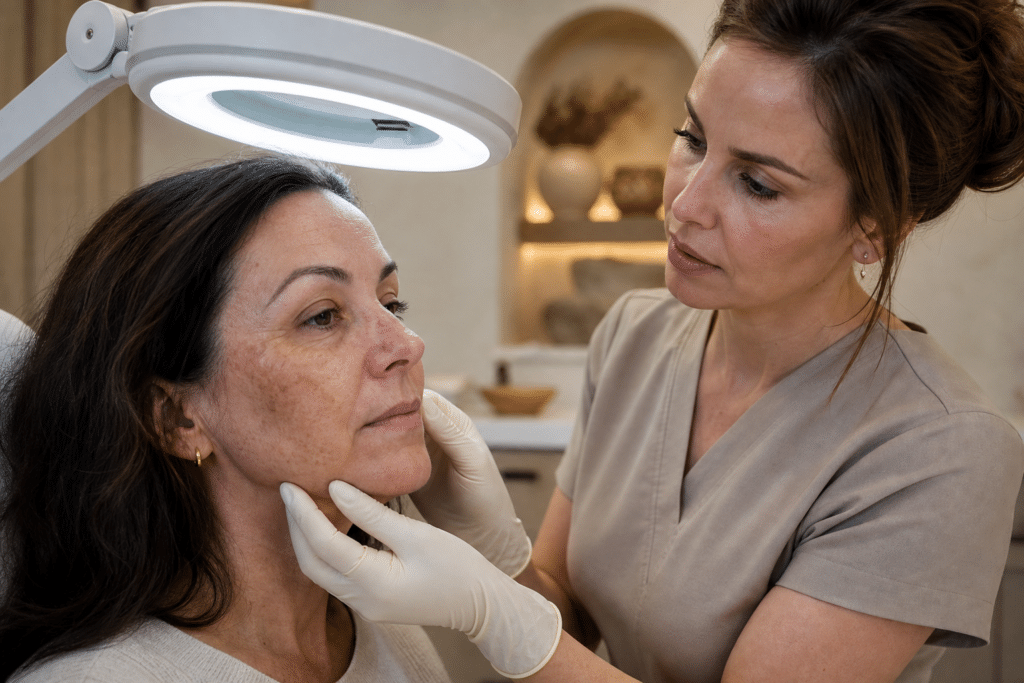
Why Santa Fe Skin Shows Sun Damage Faster
Three local factors stack on top of each other here.
Altitude. UV radiation intensifies as elevation increases, on the order of a few percent for every 1,000 feet of elevation gain. At Santa Fe’s roughly 7,000 feet, that means measurably more UVB reaching your skin during the same lunchtime walk that would be gentler at sea level.
Clear, dry air. Northern New Mexico averages a high number of sunny days per year, and low humidity means less atmospheric scattering of UV. Skin also loses moisture faster in dry air, and a compromised barrier is more reactive, which makes post-inflammatory pigment more likely after any irritation.
Reflection and lifestyle. Between hiking, biking, gardening, patio dining, market weekends and ski season, most of our clients spend real time outdoors year round. Snow reflects a large share of UV back upward, so the exposure does not stop when summer does.
The practical takeaway is that sun damage in Santa Fe is cumulative and continuous. A treatment plan that works here has to include correction of existing pigment and a maintenance routine that assumes ongoing exposure.
What Sun Damage Actually Looks Like on the Skin
Sun damage is an umbrella term. Knowing which type you have matters, because the treatments differ.
Solar lentigines (sun spots or age spots). Flat, well-defined brown spots, usually on the face, chest, shoulders and backs of the hands. These are localized clusters of overactive pigment cells and they respond very well to light-based treatment.
Melasma. Larger, symmetrical, blotchy patches, often across the cheeks, forehead and upper lip. Melasma is hormonally influenced as well as sun-triggered, it sits deeper, and it recurs easily. It is managed rather than cured, and aggressive heat-based treatment can make it worse. This is exactly why a provider assessment matters before you book anything.
Post-inflammatory hyperpigmentation. Dark marks left behind after acne, ingrown hairs or irritation. Sun exposure darkens and prolongs them.
Diffuse redness and broken capillaries. Sun exposure damages small vessels, leaving persistent flushing across the nose and cheeks.
Photoaging texture. Crepiness, enlarged pores, dullness and fine lines caused by UV breaking down collagen and elastin over years.
Most people over 35 have some combination of at least three of these. A layered plan almost always outperforms a single treatment.
Professional Treatments That Correct Sun Damage
IPL Photofacial for Brown Spots and Redness
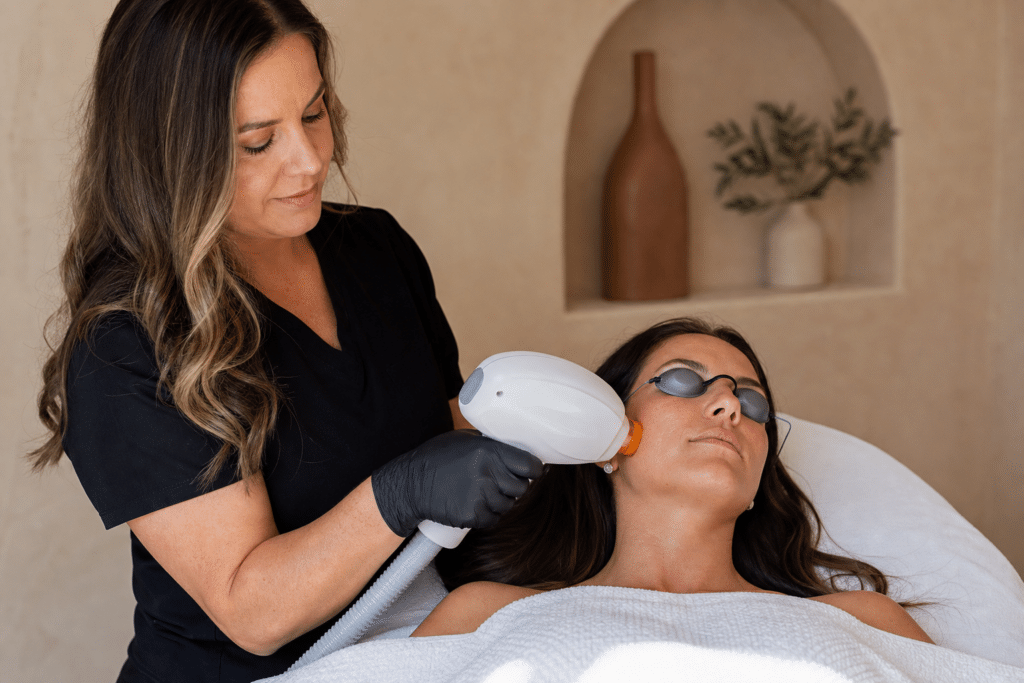
Intense pulsed light delivers broad-spectrum light that is absorbed by pigment and by hemoglobin in small vessels. The targeted pigment breaks up and clears through the skin’s own processes over the following one to two weeks, and treated capillaries collapse. IPL is the workhorse for classic Santa Fe sun damage because it addresses brown and red at the same time, with no true downtime beyond a few days of coffee-ground darkening as spots surface and flake away.
Most clients see meaningful clearing after a series of three sessions spaced about four weeks apart. If you want the mechanism explained in detail, our post on how an IPL photofacial works walks through candidacy, sensations and aftercare.
Medical-Grade Facials and Resurfacing
A professional facial is not a spa indulgence when it is built around clinical actives. Exfoliation with acids, extraction, and infusion of brightening serums accelerates cell turnover so pigmented cells move up and out faster. HydraFacial in particular pairs gentle resurfacing with hydration, which suits dry high-desert skin that cannot tolerate harsh peels. Dermaplaning removes dead surface cells and vellus hair so brightening products penetrate better. These are ideal as monthly maintenance between light-based sessions, and you can review the full menu on our medical-grade facial in Santa Fe page.
Microneedling RF for Texture and Deeper Photoaging
When sun damage has progressed past pigment into laxity, crepey texture and fine lines, collagen stimulation becomes the priority. Radiofrequency microneedling delivers controlled energy below the surface to trigger new collagen and elastin production over the following months. Because it targets remodeling rather than pigment, it pairs well with IPL in a staged plan, and it is often the better first step for clients with melasma who need a heat-cautious approach. See our microneedling RF page for treatment specifics.
Prescription-Strength and Medical-Grade Topicals
No in-office treatment holds without the right home routine. The evidence-backed core for pigment includes a retinoid to speed turnover, vitamin C for antioxidant protection and brightening, a tyrosinase-inhibiting agent to slow new pigment formation, and a mineral broad-spectrum SPF 30 or higher used daily. Over-the-counter versions of these are usually underdosed. Our medical-grade skincare consultations match strength to your barrier tolerance, which matters more in dry climates where over-exfoliation is the most common self-inflicted setback.
Why Late Summer and Fall Are the Right Time to Treat
Light-based treatments and resurfacing temporarily increase photosensitivity, and fresh pigment can rebound if the skin goes straight back into peak UV. Starting a series in late August or September means the bulk of your sessions land during shorter days and cooler weather, when it is realistic to stay diligent about sun protection.
There is a second reason. Correction takes time. A three-session IPL series plus a collagen-building protocol runs roughly three to four months from first appointment to final result. Beginning now means clear, even skin by the holidays rather than a rushed attempt in December.
A Sample 12-Week Sun Damage Repair Plan
- Week 0, consultation. Skin analysis, pigment type identification, medical history review, and confirmation that what looks like sun damage is not something that needs a dermatology referral.
- Week 1, IPL session one plus home routine launch. Retinoid introduced two to three nights per week, daily mineral SPF, vitamin C every morning.
- Week 4, medical-grade facial. Gentle resurfacing and hydration while pigment continues clearing.
- Week 5, IPL session two. Settings adjusted based on how your skin responded.
- Week 8, IPL session three. Most clients see the largest visible shift here.
- Week 10, microneedling RF. Added if texture, laxity or fine lines are part of the concern.
- Week 12, reassessment. Progress photos compared, maintenance cadence set, usually a facial every four to six weeks and a light-based touch-up once or twice a year.
Plans are always customized. Melasma-dominant skin, darker Fitzpatrick types and clients on photosensitizing medications follow different paths, which is why the consultation is not a formality.
Prevention That Actually Works at Altitude
- Mineral SPF 30 or higher, every single morning, including cloudy days and winter. Zinc oxide holds up well in intense high-desert sun.
- Reapply every two hours outdoors. A brush-on mineral powder makes this realistic over makeup.
- Wear a wide-brim hat and UV-filtering sunglasses. Hats meaningfully reduce cumulative facial exposure, and eye-area skin is thin and quick to show damage.
- Do not skip antioxidants. Topical vitamin C in the morning helps neutralize free radicals that sunscreen alone does not stop.
- Support your barrier. In low humidity, a richer nighttime moisturizer reduces the irritation that drives new pigment.
- Respect ski season. Reflected UV off snow is significant, and February sunburn is common here.
Frequently Asked Questions
Can sun damage be reversed completely?
Surface pigment and vessel damage often clear dramatically, and many clients reach skin that reads as even in natural light. Deeper collagen loss improves substantially with collagen-stimulating treatment, though it is remodeling rather than a full reset. Realistic expectation setting is part of the consultation.
How many IPL sessions will I need for sun spots?
Most people need three sessions about four weeks apart. Long-standing damage or larger treatment areas such as the chest and hands may need four to six.
Is IPL safe for melasma?
It can be helpful in some cases and counterproductive in others, because heat can stimulate melasma. Melasma-dominant patients are often better served by a combination of topicals, gentle resurfacing and conservative energy settings. This is assessed individually.
Does treating pigment hurt?
IPL feels like a quick warm snap against the skin, comparable to a light rubber band flick. Most people describe it as very tolerable, and treatments for the full face typically take 20 to 30 minutes.
What downtime should I plan for?
Expect mild redness for a few hours and darkening of treated spots for three to seven days before they flake off. Makeup is generally fine the next day. Avoid intense sun, hot yoga and saunas for a couple of days.
Will my sun spots come back?
Treated spots do not typically return, but new ones will form with new exposure. Daily SPF plus an annual touch-up session is what keeps results stable.
Start Your Repair Plan in Santa Fe
Sun damage is the single most common concern we see, and it is also one of the most rewarding to treat, because the change is visible in the mirror rather than theoretical. If you are looking at the results of a Santa Fe summer and want a plan built for your skin type rather than a generic package, our physician-led team can map it out with you.
Schedule your consultation with Seamless Skin M.D. or call (505) 772-0185. We are located at 308 N Guadalupe St in Santa Fe, open Monday through Thursday, 10am to 5pm.